Dual-Mode IoT Connectivity
ESA-backed collaboration developing a dual-mode satellite and mobile IoT module to ensure seamless near-global device connectivity.
Share solution:

Challenge
Although satellite connectivity is rapidly becoming the future of IoT, turning this potential into reality presents a significant technical hurdle. Currently, building dual-mode devices requires stitching together separate chips and antennas, as no simple, off-the-shelf solution exists. This leaves vast unconnected areas, such as oceans, remote forests, and farmland, out of reach for standard cellular networks.
About the project
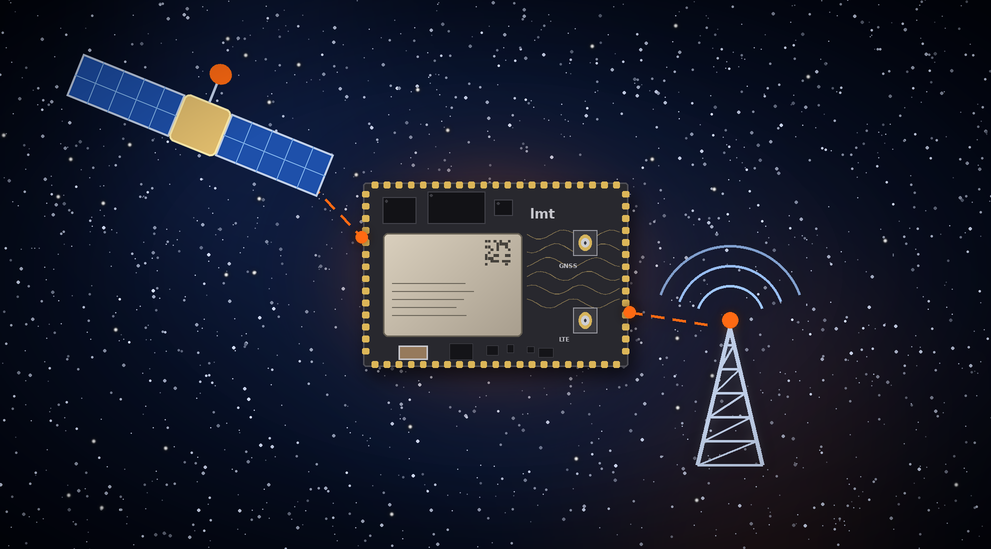
To address this gap and capture early market leadership, LMT Group is collaborating with the European Space Agency (ESA), Spanish LEO operator Sateliot, and Ventspils International Radio Astronomy Center (VIRAC) to develop a cost-effective, all-in-one hardware and software dual-mode IoT connectivity module. Such a module addresses major barriers to mass-market NTN adoption by delivering seamless, unified connectivity across terrestrial (LTE-M/NB-IoT) and 3GPP Rel 17 satellite networks.
The end-to-end data transfer solution will be engineered to optimize efficiency, latency, and data size. Ultimately, the initiative will yield a TRL 4 laboratory-validated prototype, demonstrating a commercially viable, low-power pathway toward ubiquitous device connectivity.
The role of LMT Group
Within the scope of the project, LMT Group acts as the lead developer and primary implementer, focusing on expanding its IoT sensor solution portfolio and driving sensor business growth. LMT Group is enhancing its existing IoT Shortcut module by developing non-terrestrial network (NTN) satellite communication functionality and the switching logic required to transition between satellite and terrestrial networks (NTN-TN).
Working alongside key partners – Spanish satellite operator Sateliot for solution testing and demonstration, and Latvian partner VIRAC for specialized expertise – LMT Group is looking to overcome the market barriers of complex, expensive hardware by delivering a single, low-power module that works seamlessly across urban, rural, and remote environments without requiring multiple devices or complex setups.
This initiative positions LMT Group to significantly broaden the capabilities of its IoT Shortcut product, unlock new commercial opportunities, and strengthen its presence within the ESA partner network. By closing critical connectivity gaps, LMT Group is looking to enable businesses to participate more effectively in ESA and EU secure connectivity programs.